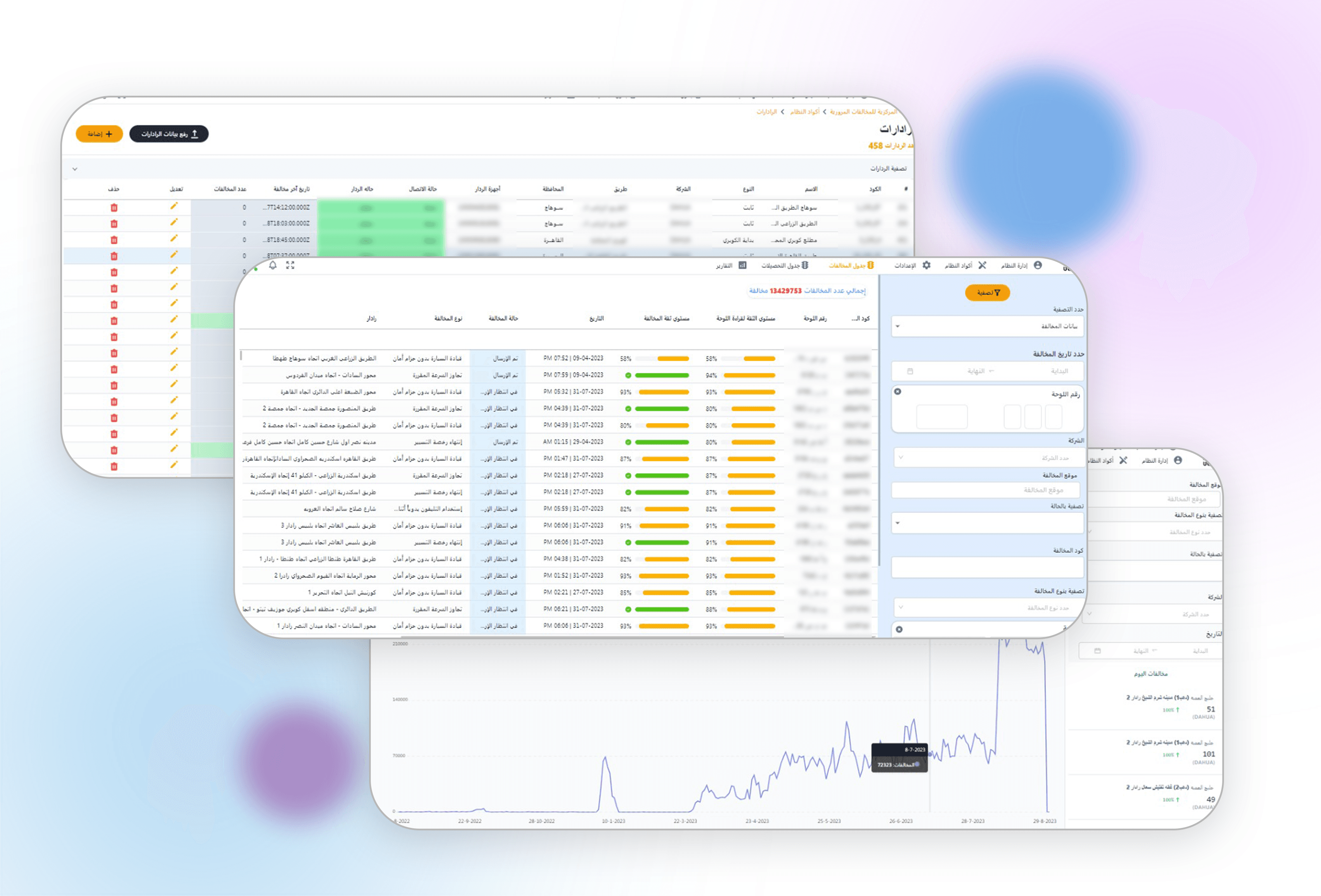
Local & Regional Governments / AI-Powered Traffic Violation Management System in Egypt
We understand the growing demand for digital self-service among citizens and the urgent need for municipalities to modernize operations. This platform was designed to strengthen citizen engagement, improve city-level efficiency, and eliminate data silos through a scalable AI-powered workflow.
Project Process and Experiment
The legacy traffic violation process in Egypt was affected by manual bottlenecks, long wait times, and higher error rates. Government stakeholders needed a modernized system capable of reducing delays, improving precision, and scaling reliably.
Our Solution
Shelter Technology designed a cloud-based, AI-integrated traffic violation platform that works with existing government databases. It automates fine processing, supports real-time status updates, and provides fast citizen dispute handling while preserving operational transparency for authorities.
Key AI Features of the Solution
Automated Number Plate Recognition (ANPR)
Automatically detects and reads vehicle license plates to accelerate violation processing and improve record accuracy.
Seat Belt Detection
Uses AI vision models to identify seat belt violations and support enforcement of critical road safety rules.
Cell Phone Detection
Identifies distracted driving caused by phone usage, helping reduce incidents and improve compliance on roads.
Design and Development
We built a user-friendly and high-performance platform following modern engineering standards. The system incorporates predictive analytics, workflow automation, notification services, and reporting modules designed for long-term growth and policy evolution.
Testing and Deployment
Before launch, the platform passed full QA validation and real-world pilot testing with selected users. After refinements, we deployed the system and trained government teams to use the product effectively in daily operations.
The Final Results
The implementation significantly reduced processing times, increased operational accuracy, and improved citizen experience. By digitizing traffic violation workflows with AI, the solution helped redefine how violations are managed at a national scale.